About Harrowfire
About Harrowfire and how enquiries are handled
Harrowfire takes enquiries about fire safety for homes and buildings across Harrow. The specialist firms who carry out the work operate independently. Find out how an enquiry moves from a question to a finished report or training session.
Taking enquiries about fire safety
Harrowfire receives questions from people who manage buildings or live in homes where fire safety needs attention. A landlord might notice a gap around a door frame, or a resident might wonder if their block has an up-to-date plan for getting everyone out.
Every enquiry starts with a conversation about what is needed. That might be a full inspection of escape routes, a check on whether fire doors close properly, or advice on what the law requires for a house shared by several households. The person asking does not need to know the exact name of the service before getting in touch.
Once the nature of the problem is clear, the details are passed to a specialist firm that handles that specific type of work. Harrowfire does not carry out inspections or write reports itself. It holds the initial conversation so the right firm gets the right information from the start.
The specialist firms doing the work
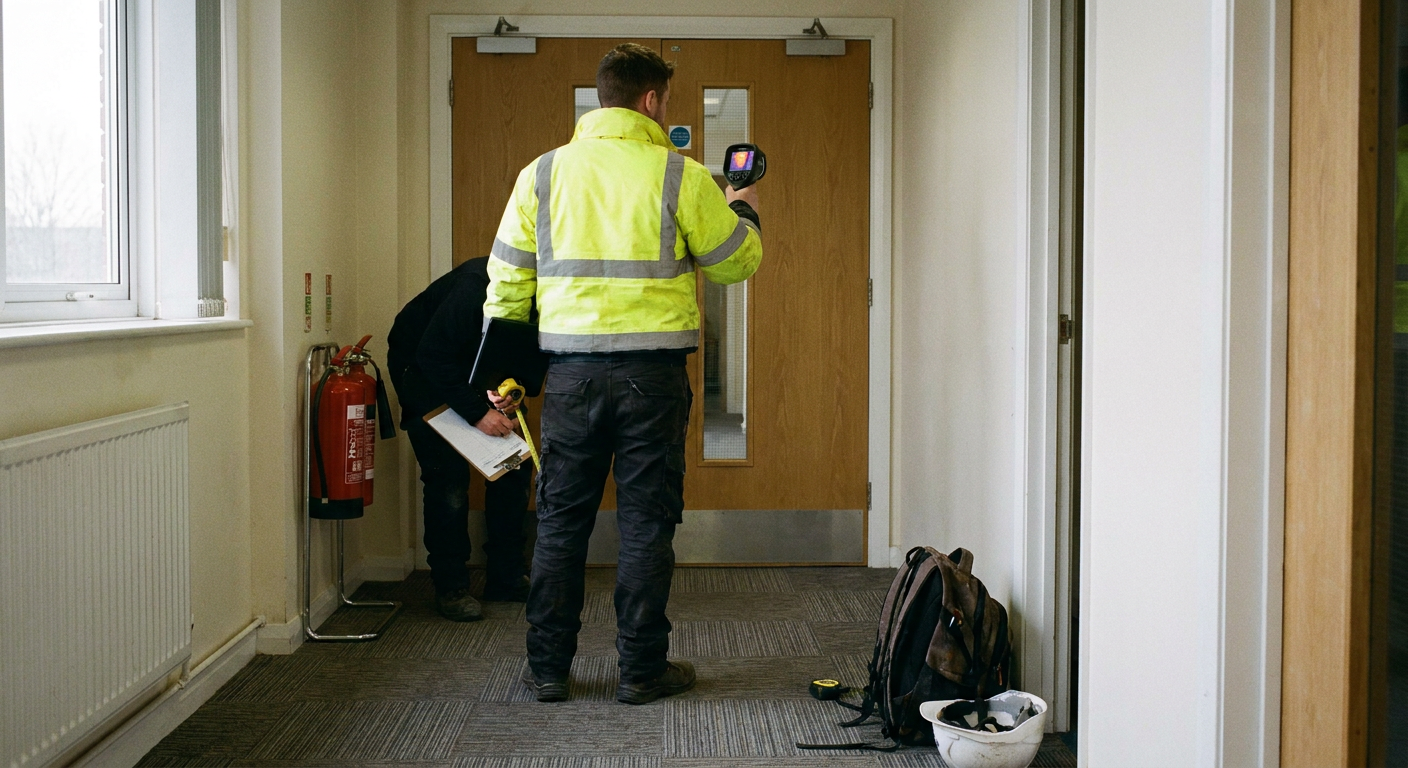
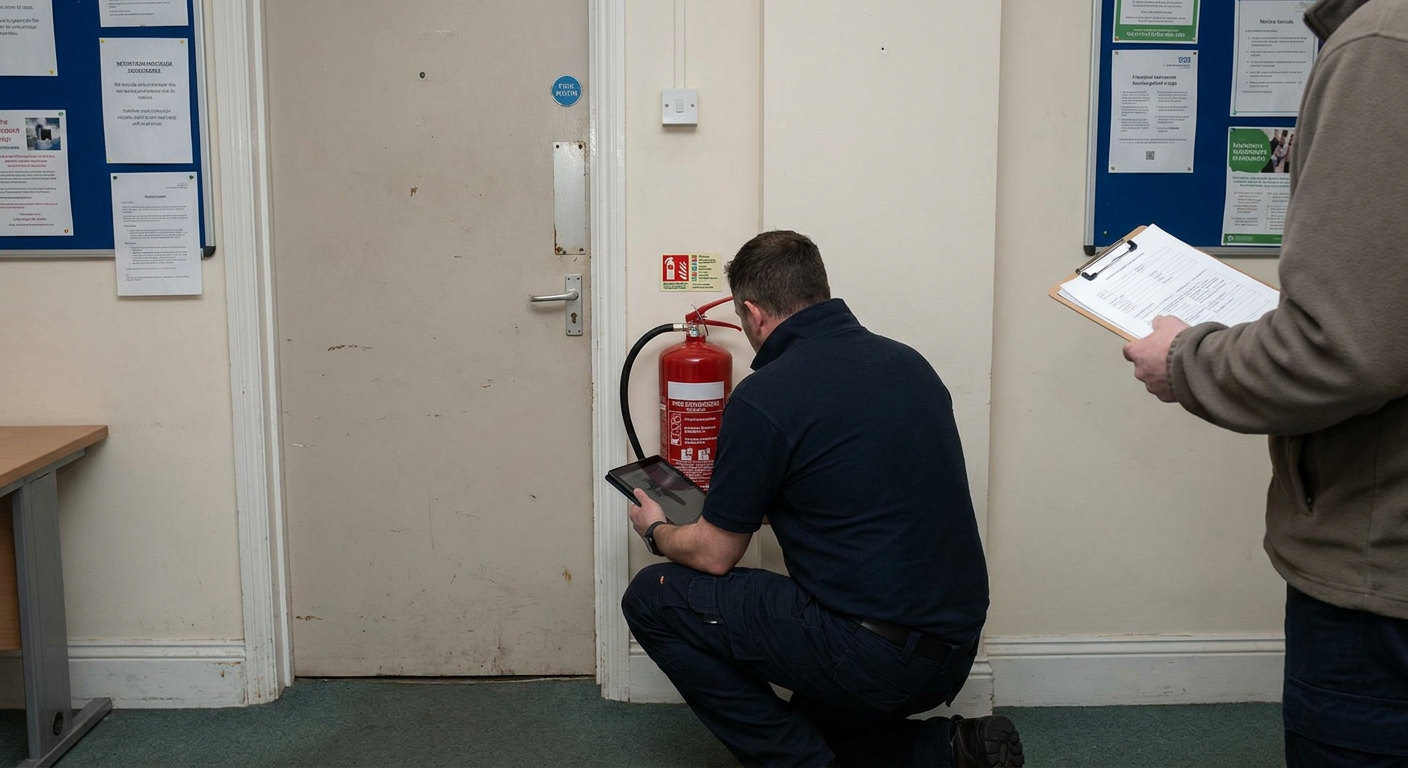
Separate specialist firms handle the practical work. One firm might spend a day examining every fire door in a block of flats, recording which ones fail to self-close and which have damaged seals. Another might sit down with staff in a shop to talk through what to do when an alarm sounds.
These firms employ the people who walk through buildings, measure gaps, test equipment and write the findings down. They hold the qualifications required for their specific trade. When a fire strategy needs drafting, or a compartmentation survey requires opening up walls to look for hidden voids, the firm assigned to that job brings the relevant tools and knowledge.
Because each firm focuses on its own discipline, the person who inspects extinguishers is not the same person who delivers warden training. This separation means the work stays within defined areas of competence. Harrowfire passes the enquiry along; the specialist firm completes the task and reports back directly to the person who asked for help.
What happens after an enquiry
After the details reach the appropriate firm, someone from that firm contacts the enquirer directly. They agree a time to visit the building or schedule a training session. For a written assessment, the specialist walks through the premises, notes hazards and produces a document setting out what they found and what needs doing.
The enquirer receives the finished work from the specialist firm, not from Harrowfire. If the report recommends further action, such as replacing a door or arranging annual testing, the enquirer decides how to proceed. There is no obligation to use the same firm for follow-up work.
Questions often come from people managing houses in multiple occupation, blocks of flats above shops, or student accommodation. Each of these building types carries different legal duties. The guidance section explains what those duties involve, including how often assessments need reviewing and what an enforcement notice means if one arrives.
Where the work happens
The enquiries Harrowfire receives cover homes and buildings throughout the borough and its edges. That includes flats and offices in Edgware, units and depots in Park Royal, and residential streets in Stanmore, Bushey and Northolt.
A person living in South Harrow or Greenford can ask about the same range of services as someone in Ruislip or Perivale. The location matters because building types vary across these areas. A converted Victorian house used as rented rooms presents different problems from a purpose-built block or a retail unit with living space above it.
Specialist firms travel to whichever address needs attention. They bring their equipment and leave with the information required to produce a report, deliver a training course or draft a set of procedures. The geography determines travel time, not the quality or scope of the work carried out.
Documents and outcomes you receive
Each piece of work ends with something tangible: a written record of what was found, a plan showing escape routes, or confirmation that training took place.
- Written assessment report
- Lists hazards found in the building, judges the level of risk and sets out actions needed to reduce it.
- Inspection records
- Notes the condition of each fire door or compartment wall checked, marking faults that require repair.
- Evacuation plan
- Draws escape routes for the building and marks assembly points so occupants know where to go.
- Training certificate
- Confirms attendance and records what staff or wardens learned during the session. The specialist firm delivers the training and provides this written record for your files.
Send your fire safety question
Write down what you have noticed or what you need. The details go to the right specialist firm. Sending a question does not commit you to booking any work or paying a fee.
- No obligation to book
- Direct reply from the firm
- Details kept private