Fire safety guide
Who is the responsible person for fire safety?
Find out who holds the legal duty for fire safety in owned, leased and managed buildings across Harrow. Learn what the Regulatory Reform (Fire Safety) Order asks of that person and when a specialist firm must step in.

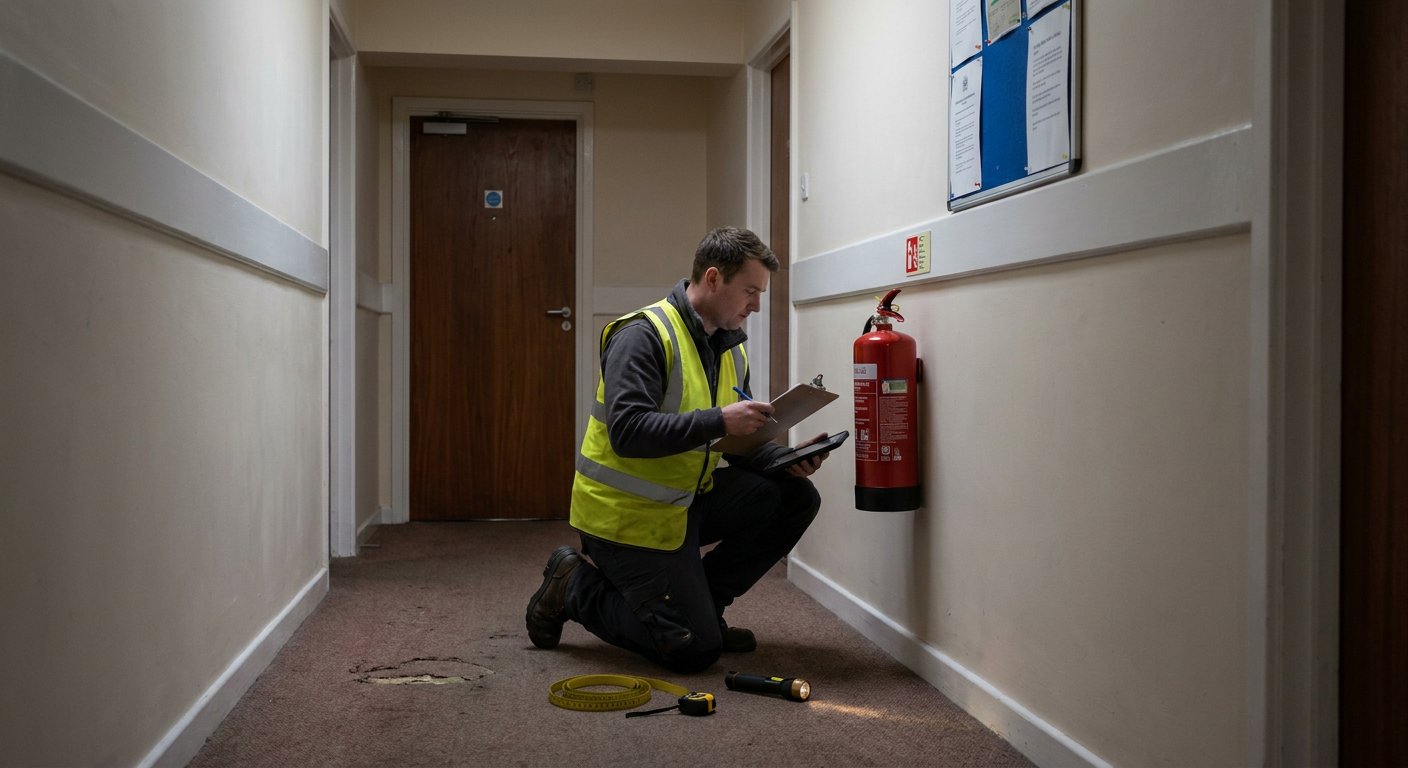
Who is liable for fire safety in Harrow buildings
The law places the burden on whoever controls a premises. If you are asking who is the responsible person fire safety falls to, the answer depends on ownership and occupation. In a building you own outright, the duty sits with you. Where parts are let to tenants, the landlord or tenant fire duty splits according to what each party controls.
A shop owner on Harrow High Street who leases the flat above remains responsible for the structure and shared areas. The tenant inside the flat carries the duty for their own space. This split applies across the borough, from retail units in South Harrow to offices in Stanmore. Every part of a building needs someone named as accountable.
If nobody accepts the role, the law does not leave a gap. Enforcement officers from London Fire Brigade can look at who benefits from the premises and assign liability accordingly. Understanding your position early avoids that scenario. A clear [fire risk assessment](/fire-risk-assessment-harrow) defines these boundaries before a problem arises.
Managing agents, freeholders and shared duties
Blocks of flats complicate things because several parties hold some control. When a block in Wealdstone has a managing agent, the managing agent fire safety responsibility covers the day-to-day running of communal corridors, stairwells and lobbies. But the freeholder retains ultimate liability for the building's structure.
This arrangement means neither party can assume the other handles everything. The [Fire Safety (England) Regulations 2022](/guidance/fire-safety-regulations-2022-harrow) added specific requirements for blocks over eleven metres, demanding closer cooperation between freeholders and agents. Both must share information about external walls and flat entrance doors.
In houses in multiple occupation, the rules tighten further. The person who receives rent or manages the property becomes the responsible person. For landlords letting rooms individually, the [HMO fire risk assessment](/hmo-fire-risk-assessment-harrow) page sets out those specific obligations. Across Harrow, mixed-use buildings like flats above shops require particular attention, since commercial and residential duties overlap. The [guidance for flats above shops](/guidance/flats-above-shops-harrow) explains how responsibilities divide in those cases.
What the fire risk assessment duty in Harrow requires
The Regulatory Reform (Fire Safety) Order 2005 asks the responsible person to identify fire risks, decide who might be harmed, and put measures in place to protect them. That process is the fire risk assessment duty Harrow building owners must follow. It applies whether you run a single office in Northolt or manage a depot in Park Royal.
The Order does not prescribe exact solutions. It demands that you evaluate the hazards present and record your findings if you employ five or more people. You must then maintain those precautions. This includes checking [fire doors](/fire-door-inspection-harrow), keeping escape routes clear, and ensuring staff know what to do in an emergency through [awareness training](/fire-safety-awareness-training-harrow).
Where the building layout is complex, a [compartmentation survey](/compartmentation-survey-harrow) checks that hidden voids and wall cavities will actually stop smoke spreading. The responsible person arranges these checks and acts on the results. Failing to do so leaves occupants at risk and exposes the duty holder to enforcement action.
When you need a competent person for fire assessment
The law says the responsible person must appoint one or more competent persons to help carry out the duties. You might wonder if you can do it yourself. For a very small, simple premises with no employees, you might manage. But most commercial spaces in Harrow exceed that threshold.
Competence means having sufficient training, experience and knowledge. A specialist firm provides that level of understanding. They examine the building fabric, test alarm coverage, review evacuation plans and produce a written report. Attempting this without the right background often misses faults hidden behind walls or above suspended ceilings.
When you instruct a specialist firm, they handle the technical work while you retain the legal duty. They might recommend a full [fire strategy](/fire-strategy-harrow) for larger sites or arrange [fire warden training](/fire-warden-training-harrow) so your staff can lead an evacuation. The responsible person stays accountable for acting on their recommendations. Finding a [competent person for fire assessment in Harrow](/areas-harrow) means looking for firms that understand local building types and enforcement expectations.
Questions about fire safety duties in Harrow
If you are trying to work out who is the responsible person fire safety duties fall on in Harrow, these answers explain where the burden sits. The law places it on whoever controls the premises.
I own a shop and lease the flat above it
You remain responsible for the structure and any shared access routes. The tenant holds the duty for the interior of their flat. Both parties need separate assessments covering their controlled areas.
Our block in Wealdstone has a managing agent, who holds the duty?
The managing agent handles daily communal area safety, but the freeholder retains structural liability. Both must cooperate, especially under the 2022 regulations for taller buildings.
Can I carry out the fire risk assessment myself?
Only if you have the competence to do so. Most commercial premises require a specialist firm to ensure nothing is missed and the written record satisfies enforcement standards.
What happens if London Fire Brigade inspects and I have no assessment?
They can issue an enforcement notice requiring immediate action. In serious cases, they can prohibit use of the building or pursue prosecution. A written record prevents this.
Does my insurer need to see the fire risk assessment?
Most commercial policies require compliance with fire safety law. Without a valid assessment, your insurer could refuse a claim following a fire, leaving you to cover all losses.
How long does an assessment take and will we close?
A small unit typically takes a few hours. Occupants rarely need to leave during the inspection. The specialist firm works around normal activity to avoid disruption.
I lease a unit on an industrial estate, what does my landlord cover?
Your landlord usually maintains the external structure, shared yards and communal fire alarms. Your lease should specify this. You remain responsible for everything inside your demised area.
Once named as responsible person, what do I do each year?
Review the assessment at least once a year or whenever the layout or use of your home changes. A specialist checks fire doors, tests extinguishers, updates evacuation plans and confirms staff training records are current. Keep every report filed so you can produce it if asked.
Ask about your fire safety duties
Send details about your building and its current arrangements. A specialist firm will respond with advice on what is required. There is no obligation to proceed beyond that initial conversation.
- No obligation to proceed
- Local Harrow specialists
- Clear written advice