How-to guide
How to arrange a fire risk assessment in Harrow
Find out what information to gather about your building before enquiring, what the attending specialist will want access to on the day, and what paperwork arrives afterwards. A first-time duty holder in Harrow will know exactly what to expect.
Who needs to book one and why
If you manage a block of flats, run an HMO, or own a shop with accommodation above it in Harrow, the law places the duty on you. For someone handling this as a first time responsible person Harrow buildings can feel unfamiliar, so start by confirming your role. The responsible person is usually the freeholder, the managing agent, or the employer if the premises are a workplace. You can read more about who holds that duty and what it involves.
Knowing how to arrange a fire risk assessment begins with accepting that the work must be done by a competent specialist firm. You do not carry out the inspection yourself. Your job is to provide accurate details about the home or building and grant access so the specialist can examine every relevant area. If you are unsure whether your situation requires one at all, check whether your type of building falls under the requirement.
Information to have ready before you enquire
Before you make contact, gather the facts about the building. This fire assessment paperwork checklist saves time and helps the specialist firm quote accurately. Note the address, the number of storeys, the total number of flats or rooms, and the approximate year of construction. Mention any recent alterations, such as loft conversions or new partitions, because these change how fire spreads.
You might wonder whether you need the original plans or if a rough floor layout will do. Original architectural drawings help, but they are rarely essential. A clear sketch showing room positions, staircases, corridors, and where doors sit is enough for the initial booking a fire assessment steps. If you hold previous reports, electrical installation condition reports, or records of fire alarm testing, have those available too. The specialist will ask what assessor needs on the day, and having these documents ready means fewer follow-up calls. Buildings across North Harrow, Stanmore, and South Harrow vary widely in age and layout, so specifics matter.
Preparing the building for the visit
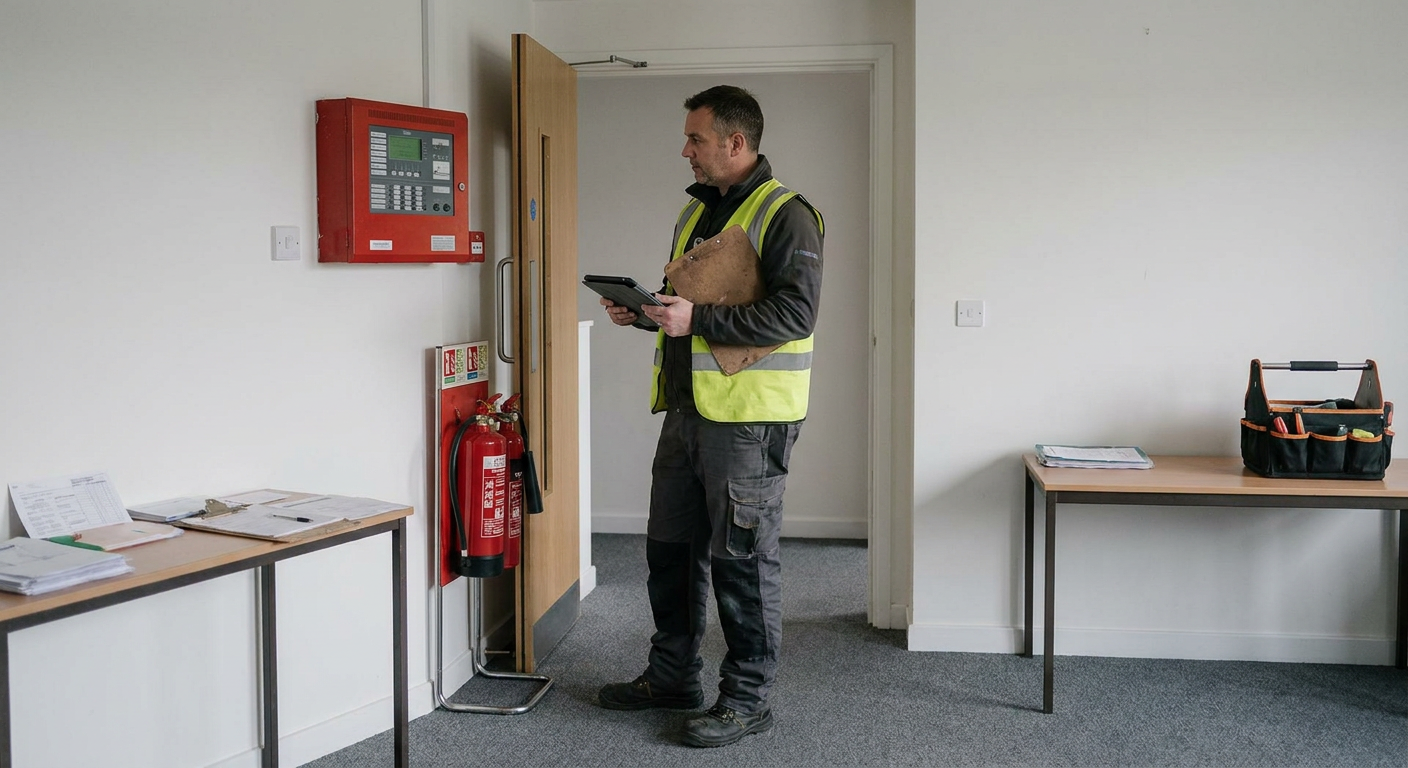
To prepare building for fire inspection, ensure the specialist can reach every shared space. The walk round covers communal corridors, stairwells, bin stores, plant rooms, roof voids, and external escape routes. Locked risers and cupboards must be opened during the visit. So you need to decide who needs to be on site to let the assessor into locked risers and plant rooms. Usually, this means a caretaker, a managing agent, or a nominated key holder must attend. Tenants do not need to grant entry to their individual homes unless the assessment specifically includes them, which happens in certain HMO arrangements.
Will tenants or staff be disturbed while the walk round happens? Generally, no. The specialist works quietly through shared areas without interrupting daily routines. If a fire alarm test is required, residents receive advance notice. The goal is to observe the building as it functions normally, since blocked exits or wedged-open doors are findings in themselves.
Timing your booking around expiry dates
A common question is how far in advance you should book if your current assessment is about to run out. Fire risk assessments do not carry a fixed legal expiry date, but they must remain valid. Any significant change to the building, its use, or its occupants means the document needs reviewing. As a rule, specialists recommend a review every twelve months for higher-risk buildings and every two to three years for lower-risk ones. Check when yours was last updated.
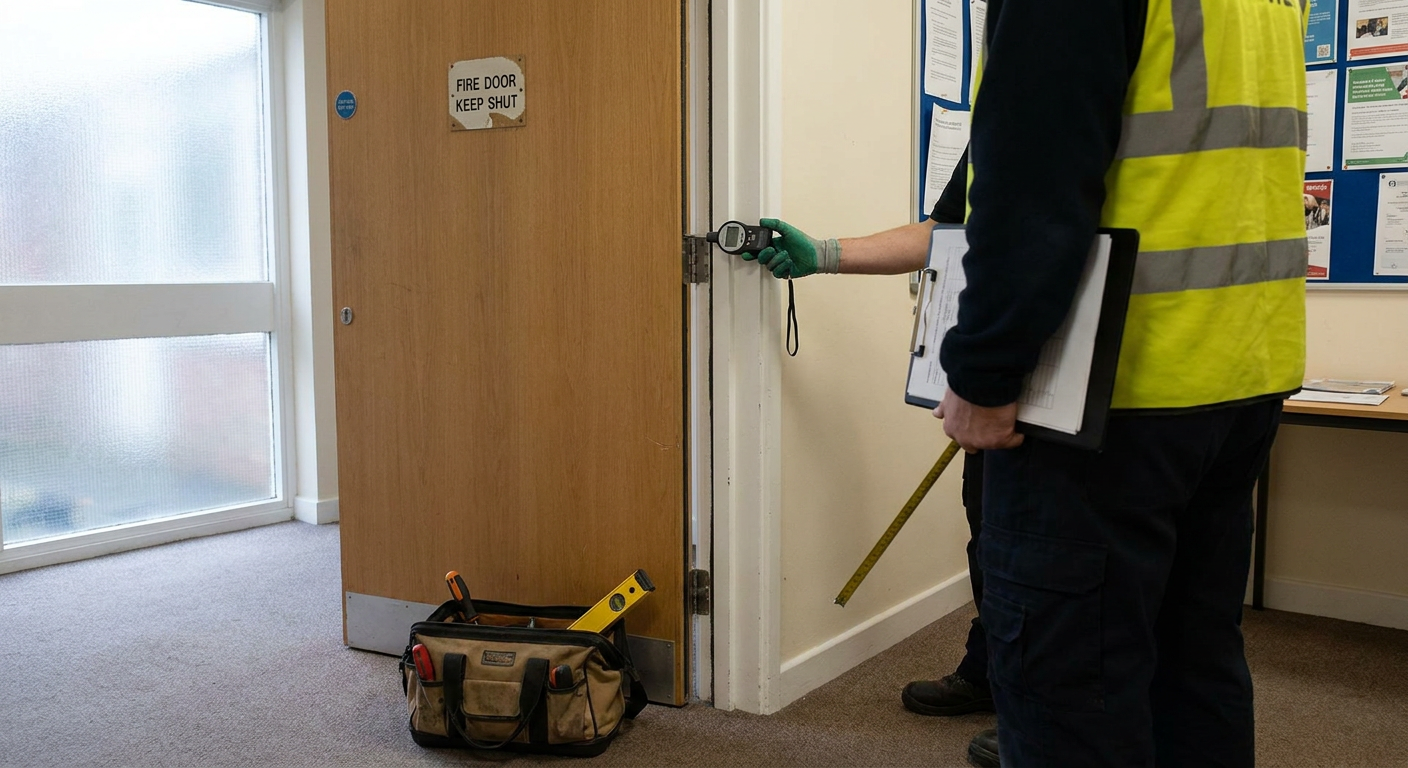
If the date is approaching, allow four to six weeks to secure a visit from a specialist firm operating in Harrow. Rush bookings are sometimes possible, but they limit your choice. Planning ahead also gives you time to fix obvious issues beforehand, such as replacing missing fire door seals or clearing stored items from escape routes. Guidance on how often to review your assessment explains the intervals in more detail.
What arrives after the inspection
After the visit, the specialist produces a written report. What exactly arrives afterwards and how do you act on the actions listed? The document contains a record of findings, an evaluation of existing precautions, and a prioritised action plan. Each action carries a risk rating and a suggested timeframe for completion. High-priority items demand immediate attention, while lower-priority observations form part of ongoing maintenance.
Your responsibility is to read the report, assign tasks, and keep evidence that you acted on them. If the report highlights faulty compartmentation, you may need to commission a separate survey. If fire doors fail, a dedicated inspection identifies exactly what needs repairing. Some buildings also require updated evacuation plans or staff training to close the gaps the report identifies. Keep the paperwork safe, because the local fire authority can request it at any time, and failing to produce it is an offence.
Typical costs for fire safety work in Harrow
Prices vary because every building differs in size, age, and complexity. A small flat conversion takes less time than a large purpose-built block. The figures below show typical ranges for common jobs a duty holder might face after reading an assessment report.
-
Fire risk assessment (small block)
£250 to £450
Number of floors, common parts, and whether previous records exist for the specialist to review.
-
Fire door inspection (per door)
£35 to £60
Type of door, hardware fitted, and whether the specialist tests intumescent seals and self-closers.
-
Compartmentation survey (flat)
£400 to £800
Access to voids, ceiling tiles, and service risers that the specialist needs to open and examine.
-
Evacuation plan drawing
£150 to £300
Floor plan complexity and the number of distinct escape routes the specialist must map out.
-
Fire warden training (group)
£300 to £500
Group size, venue location, and whether the specialist tailors content to specific building risks.
These figures indicate what work of this type typically costs. Nothing here is a quotation. Only a physical inspection settles a figure for one property.
Ask about arranging your assessment
Send the details of your building and a specialist firm will reply with availability and what they need from you next. Submitting an enquiry does not commit you to booking anything.
- No obligation to proceed
- Local Harrow coverage
- Clear next steps outlined