Guides
Fire safety guides for landlords in Harrow
Find out what a fire risk assessment involves, how often fire doors need checking, and what the law requires from the person responsible for your building. Each guide answers one specific question about keeping your home safe.
Understanding Fire Risk Assessments
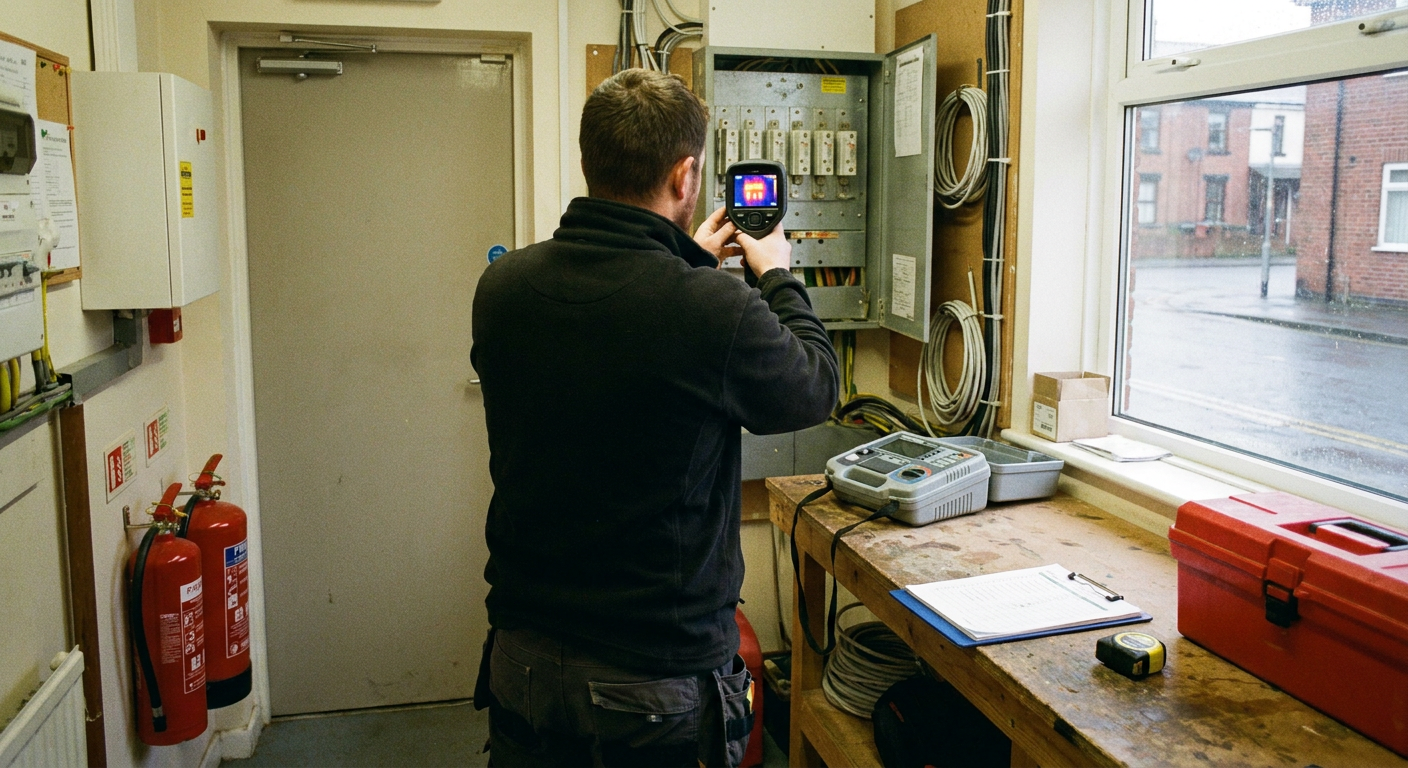
A fire risk assessment is the starting point for managing fire safety in any shared building or rented home. It identifies where a fire could start, who might be harmed, and what needs to change. The specialist firm carrying out the work examines escape routes, alarm systems, and the materials used in the building.
If you manage a house in multiple occupation, the landlord duties are specific and documented. A separate assessment applies to student accommodation, where high occupancy changes the risks involved. For blocks of flats, the Fire Safety (England) Regulations 2022 set out exactly what owners must provide, including information for residents and regular checks on doors.
Arranging an assessment means finding a competent person to do it. The process follows a clear sequence: gathering information about the building, inspecting it room by room, recording findings, and producing a report with actions. Knowing when to update that report matters too, because changes to the building or its use mean the original findings may no longer apply.
Fire Doors and Compartmentation
Fire doors stop smoke and flames moving between rooms and corridors. They only work if they close fully, have the right seals, and carry the correct hardware. A [fire door inspection](/fire-door-inspection-harrow) looks at every door in the common parts of a block or the shared areas of a converted house. The specialist checks hinges, gaps around the frame, glazing, and whether the self-closing device actually pulls the door shut. How often these checks happen depends on the building. Taller blocks require more frequent attention than low-rise conversions. Find out [how often fire doors need checking and what gets looked at](/guidance/fire-door-check-frequency-harrow). A [compartmentation survey](/compartmentation-survey-harrow) goes further than individual doors. It looks for hidden gaps where pipes, cables, or ductwork pass through walls and floors. Both tasks produce a written record. That record tells the responsible person which faults need immediate action and which can wait for planned maintenance.
Planning for Evacuation and Strategy
An evacuation plan maps the route from every flat or room to a place of safety outside. In purpose-built blocks, the strategy might rely on residents staying put while the fire service tackles the blaze. In converted houses or buildings above shops, everyone usually needs to leave immediately. The right approach depends entirely on how the building was constructed and what protection exists between dwellings.
A fire strategy report sets out the reasoning behind those decisions. It covers the building layout, the fire resistance of its structure, the detection systems installed, and the arrangements for calling the emergency services. Specialist firms prepare these documents for new builds, major refurbishments, or when an existing building changes use.
Flats above shops present particular problems. The commercial unit below often has different opening hours, higher fire loading, and separate management. The strategy must account for both uses and ensure the residential occupants can escape regardless of what happens downstairs.
Training and Responsibilities
The responsible person is whoever controls the shared parts of a building. That might be a freeholder, a managing agent, or a landlord. Their legal duties include arranging assessments, maintaining equipment, and making sure residents know what to do in a fire. If those duties feel overwhelming, a nominated person can take on the day-to-day management of fire safety under their direction.
Staff working in residential buildings need basic awareness training. This covers how to raise the alarm, where the assembly point is, and why propping open a fire door creates a hazard. Fire wardens receive additional instruction on sweeping their designated area during an evacuation and reporting back to the person in charge.
Written policies and procedures formalise these arrangements. They state who does what, how often equipment gets tested, and the steps to follow after an incident. Extinguishers and other firefighting equipment require periodic testing and advice on placement, so the specialist firm handling maintenance can confirm everything is positioned correctly and remains in working order.
Local Guidance Across Harrow
Buildings vary across the borough. Edgware has large flat developments and office conversions that demand thorough assessments. Ruislip relies on specialist surveys and detailed reports to manage older housing stock. Park Royal contains industrial units and depots where fire loads differ sharply from residential streets.
Northolt, North Harrow, and South Harrow each have their own mix of flats, shops, and shared houses. Stanmore and Bushey feature larger homes converted into multiple dwellings, where compartmentation and escape routes need careful attention. Greenford and Perivale combine light industrial units with residential blocks, requiring distinct approaches for each type of building.
If the local authority serves an enforcement notice, the responsible person must act within a set deadline. Understanding what the notice demands and how to respond prevents prosecution. Winter brings additional risks to flats, as portable heaters, overloaded sockets, and blocked escape routes become more common. Addressing these seasonal hazards early keeps residents safer during the coldest months.
Ask about fire safety in your home
Send details about your building and the problem you have noticed. A specialist firm will review the information and respond with what needs to happen next. There is no obligation to proceed.
- No obligation to proceed
- Specialist firms handle the work
- Local to Harrow
Guidance
- Arrange assessment
Arranging a fire risk assessment in Harrow starts with knowing your building type, who holds responsibility and what an assessor needs to see on the day.
- Responsible person
The responsible person for fire safety is whoever controls the building, such as a landlord or employer. See what duties come with the role in Harrow.
- Review and updates
Fire risk assessments need reviewing as buildings and occupants change. See when to update a fire risk assessment in Harrow and what triggers a fresh one.
- Regulations 2022
The Fire Safety (England) Regulations 2022 set out duties for owners and managers of blocks of flats, including floor plans, signage and fire door checks.
- Fire door checks
Fire door checks in Harrow blocks and HMOs: how often flat entrance and communal doors are looked at, who does it and what gets written down.
- Enforcement notice
A fire safety enforcement notice sets out faults the fire service wants put right. Read what the notice means, the deadlines and how to respond.
- Winter risks
Winter fire risks in flats include portable heaters, overloaded sockets, blocked escape routes and candles. Learn what to watch for and what to change.
- Flats above shops
Fire safety in flats above shops depends on what sits below, from cooking and storage to shared escape routes. Learn what to check in Harrow buildings.
- Help and Advice
Wondering whether you need a fire risk assessment in Harrow? Read which buildings are covered, who is responsible and what a written report should include.