Fire safety guide
How often should fire doors be checked?
Find out how frequently flat entrance doors and communal doors need inspecting, what a specialist records during each visit, and how those findings turn into a repair list for your building.
Setting a fire door inspection schedule for flats
Anyone wondering how often should fire doors be checked will find the answer depends on where the door sits in the building. The Fire Safety (England) Regulations 2022 set specific intervals for blocks over eleven metres, but good practice applies to smaller buildings across Harrow too.
Communal doors on stairwells and corridors see heavy use. They get propped open, knocked by bins and damaged by deliveries. Because of that wear, a communal fire door survey in Harrow typically happens every three months. Flat entrance door checks follow a longer cycle, usually once a year, since residents handle them less roughly and they sit protected inside a hallway.
A responsible person must keep a written fire door inspection schedule for flats and update it after any incident or alteration. If a block has had recent refurbishment, more frequent visits make sense until the new work settles. The regulations apply regardless of whether the building is managed by a housing association or a private landlord.
Gaining access for flat entrance door checks
Inspecting a flat entrance door means looking at both sides. The specialist needs to see the face inside the hallway and the face inside the home, because intumescent strips, hinges and the closing mechanism span the whole frame.
Getting inside each flat requires cooperation from residents. The responsible person should give written notice well ahead of the visit, explaining why the check matters for everyone's safety. Most residents agree once they understand the purpose.
When someone refuses access, the specialist notes the refusal in the report. The responsible person then follows up with further letters and, if necessary, seeks legal advice to enforce entry. Leaving a door uninspected creates a gap in the building's fire safety record. Enforcement notices from the fire authority can follow if access problems persist without documented efforts to resolve them. A nominated person can manage this communication if the building has one appointed.
What gets recorded during a fire door inspection
The question of who can inspect fire doors comes up often. The work requires someone competent in reading door specifications and understanding compartmentation principles. During a visit, the specialist examines every component that contributes to the door's rating.
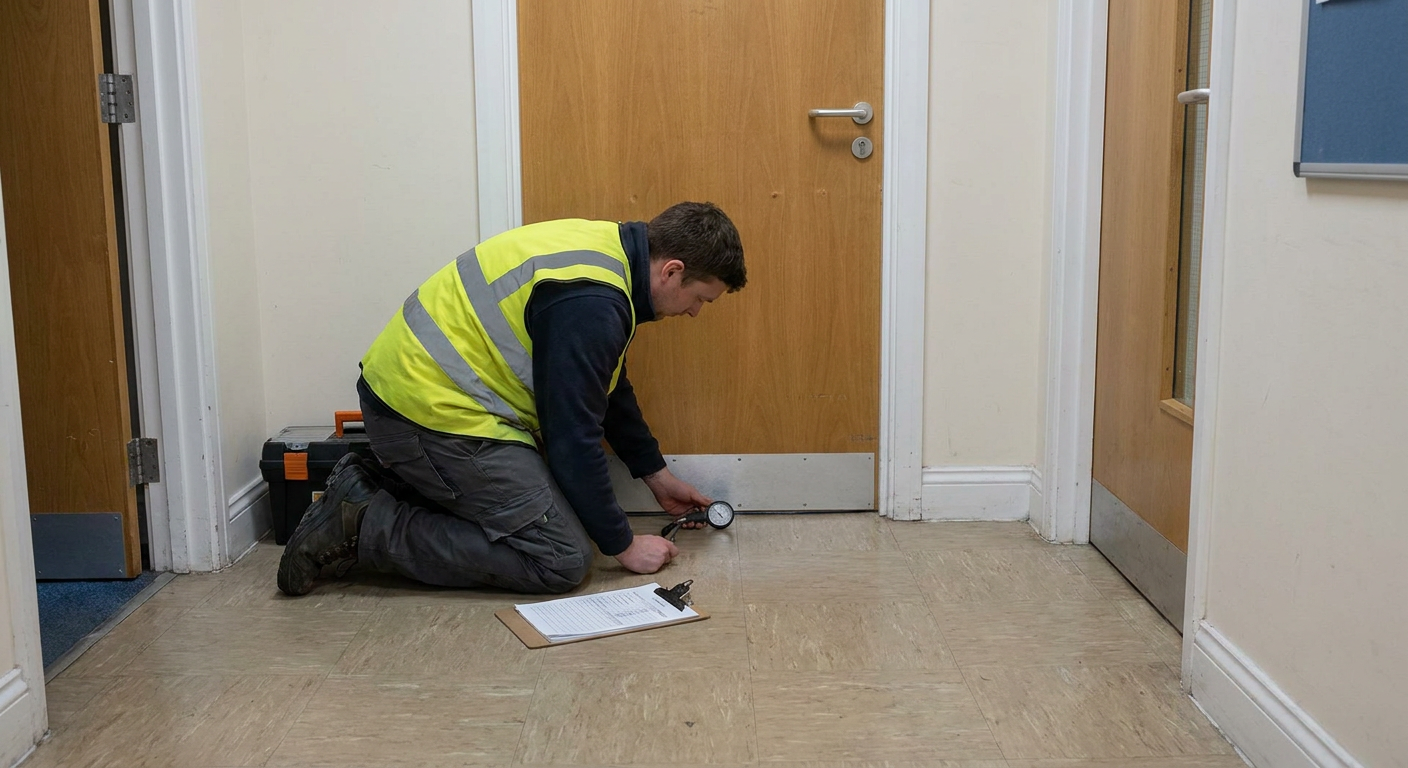
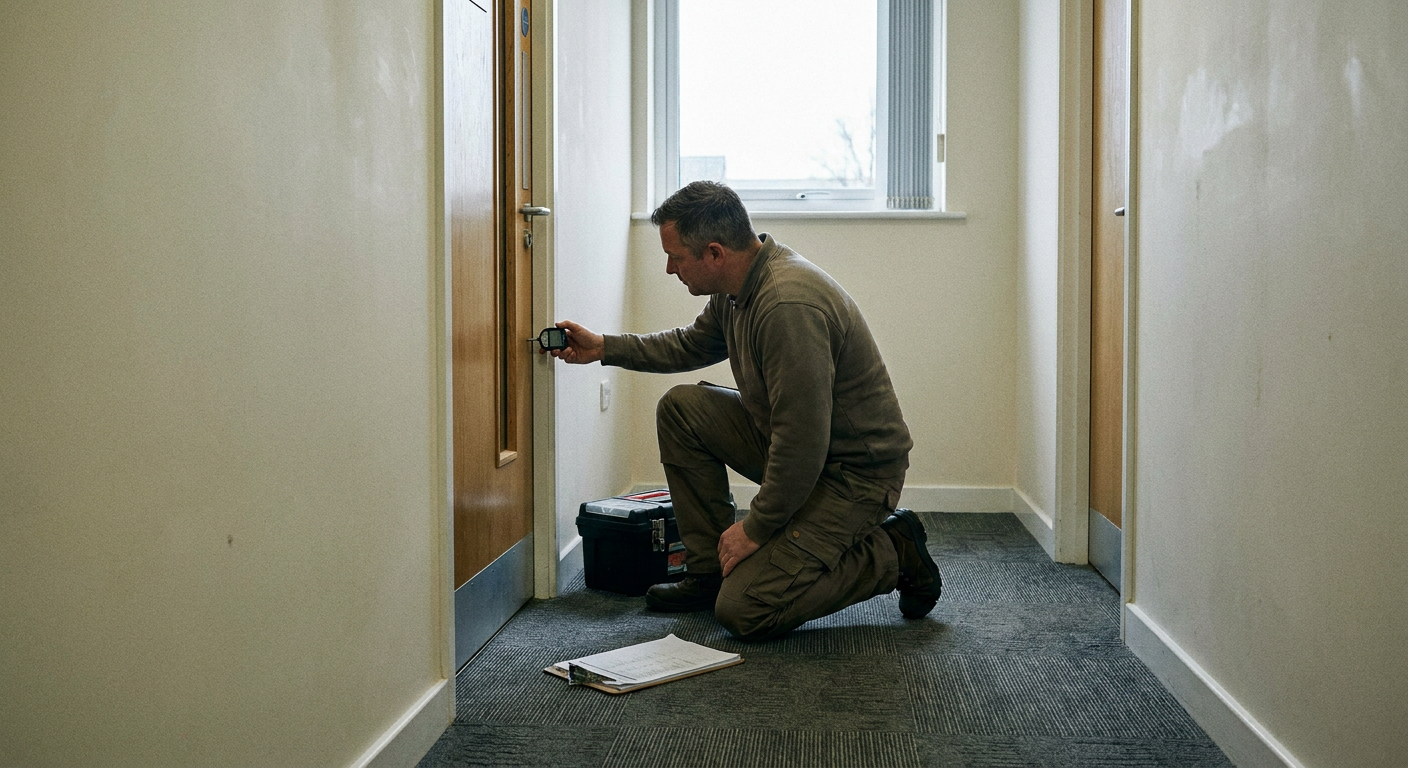
They check the certification label or plug on the top edge to confirm the fire rating. They measure the gaps around the leaf, test the self-closing device to ensure it latches from any angle, and inspect the hinges for missing screws or wear. The condition of the glazing, if present, and the integrity of the frame all go into the record.
Each door receives an individual assessment. The resulting report lists faults by location and severity, separating items that need immediate attention from minor defects. This level of detail feeds directly into maintenance planning. You can read more about the broader process in our guidance on arranging a fire risk assessment.
Paint layers, fire door gaps and seals
Decades of redecorating cause problems. Thick paint builds up on the edges of the leaf and the frame, preventing the door from seating properly. When the door does not close flush, the smoke seals cannot do their job.
Fire door gaps and seals are measured precisely. The acceptable gap under the door depends on the manufacturer's specification, but it generally must not exceed eight millimetres. Gaps around the sides and top should stay at three millimetres or less. Anything wider allows smoke to bypass the barrier long before flames arrive.
Intumescent strips expand when heated to seal the gap, but paint stops them from swelling freely. Cold smoke seals, the brushes or blades fitted alongside the strips, tear easily if painted over. A specialist will note where paint removal or replacement seals are needed to restore the door's performance.
Repairing damage versus replacing the door set
A scratched surface or a loose hinge screw rarely demands a new door. Minor damage can be repaired so long as the fix uses materials compatible with the original certification. Filling a small hole with standard wood filler voids the rating, so the specialist specifies approved compounds.
Larger damage tells a different story. If the bottom rail is split, the core is exposed, or the frame is warped beyond adjustment, the entire door set usually needs replacing. Mixing a new leaf with an old frame often fails because tolerances differ between manufacturers.
After the inspection, the responsible person receives a prioritised repair list. For a block of twenty flats, checking every door takes roughly a full working day, depending on access. The report and repair list typically arrive within a few days, giving contractors clear instructions on what to fix first. Read more about local fire door inspection in Harrow for details on how these reports are structured.
Common questions about fire door checks
Answers to the things landlords and residents in Harrow ask most often before booking an inspection.
- Painted doors and fire ratings
- Multiple paint layers stop intumescent strips from expanding and prevent the door from sealing shut. The specialist notes where stripping or replacement is required.
- Repair or replace a damaged door
- Small defects can be fixed using approved materials. Split rails, exposed cores or warped frames mean the whole door set must be replaced to maintain the rating.
- Checking twenty flats takes how long
- A specialist typically needs one full working day to inspect every door in a twenty-flat block, assuming residents grant access without delay.
- Acceptable gaps under the door
- Side and top gaps should stay at three millimetres or less. The threshold gap depends on the manufacturer but rarely exceeds eight millimetres.
- Receiving the repair list
- The specialist compiles findings into a prioritised report. Landlords usually receive the document within a few working days of the final site visit.
- Who carries out the inspection
- Someone competent in reading door certifications and measuring compartmentation tolerances. They examine every hinge, seal, closer and glazing unit on each door.
Ask about fire door checks for your building
Send details about your block and a specialist firm will respond with what an inspection involves. There is no obligation to book any work.
- No obligation to proceed
- Local specialists only
- Clear next steps